
Knee Extensions: Are They Safe After ACL Surgery?
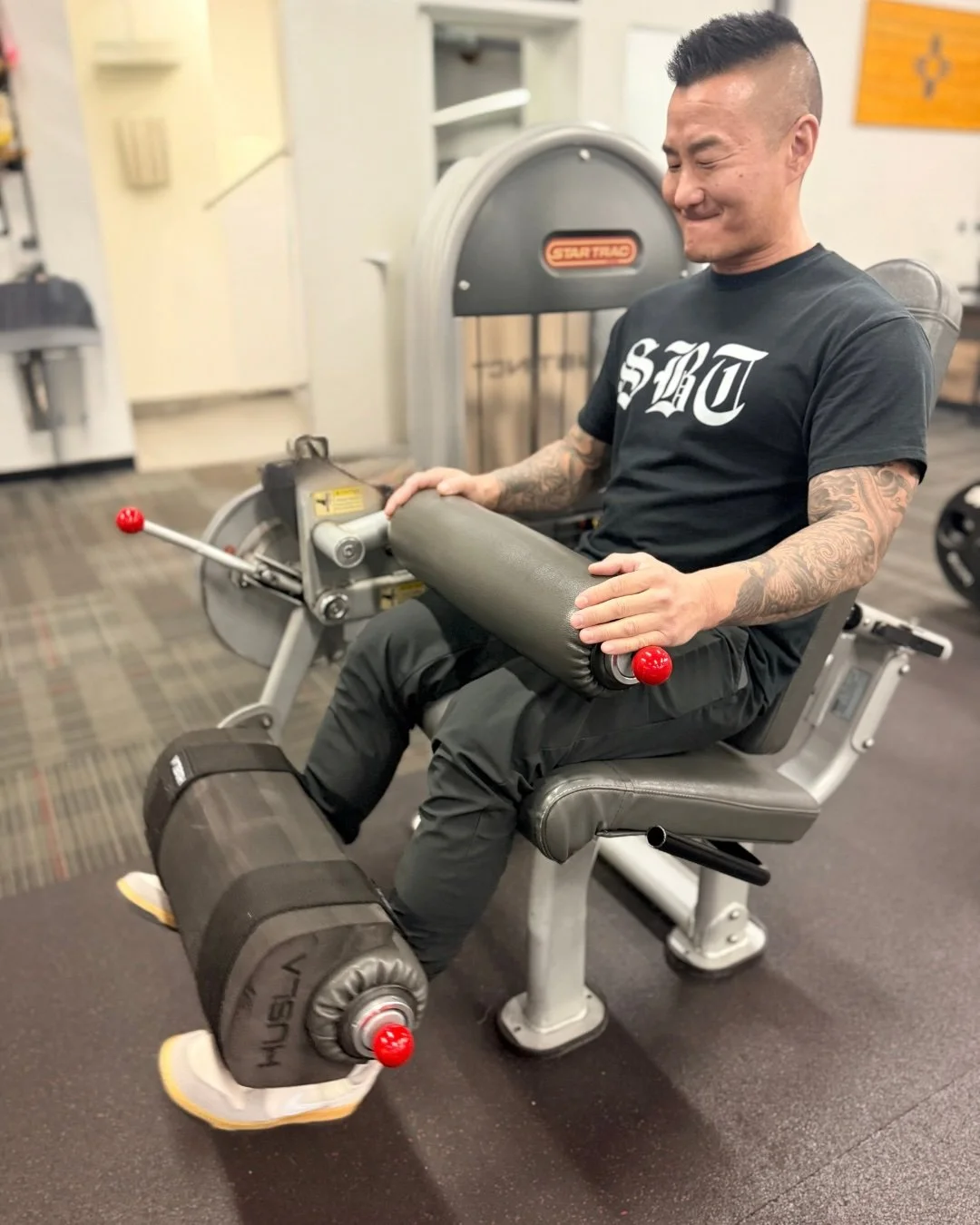
A common misconception about seated leg extensions is that they are bad for a post-operative knee, especially an ACL reconstruction. In early research, it was believed that doing open kinetic chain exercises in general, would cause your new ACL graft to stretch out (also called ligamentous laxity). However, in the 1990’s it was found that to not actually be true. Unfortunately, the misconception was already there and nobody has taken the time to really look into why that’s not true. So let’s break down the facts.
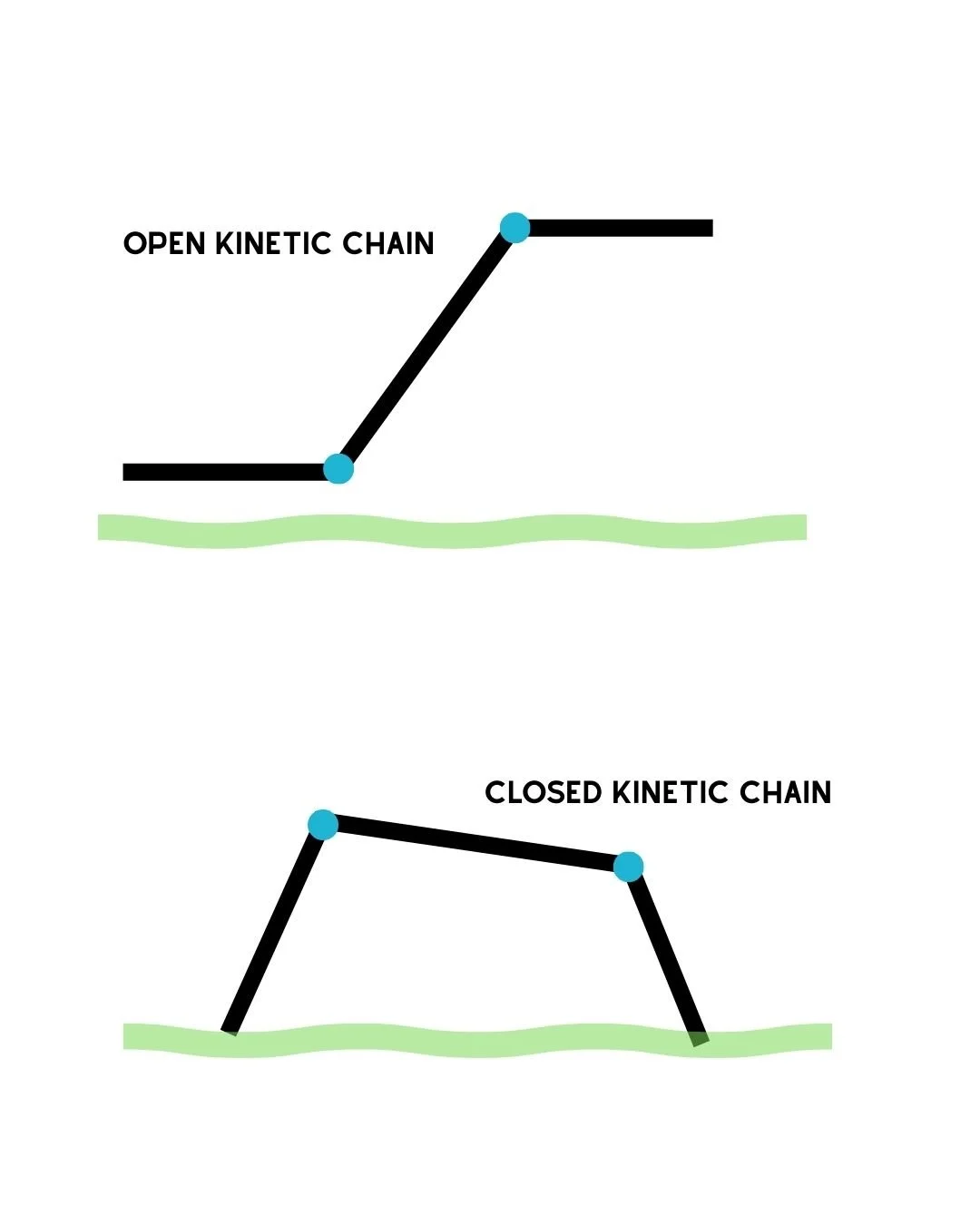
First, we need to define what open kinetic chain (OKC) and closed kinetic chain (CKC) means. In the most general way, open kinetic chain describes a movement where the end of the limb (in this case the foot) is free and not fixed, allowing it to move through space. This allows for isolating specific muscles for strengthening. A closed kinetic chain is the opposite: a movement where the end of the limb is fixed or in contact with a stable object (like a squat or leg press). These compound movements are considered functional, promoting joint stability and whole-body strength by forcing segments in the chain to work together.
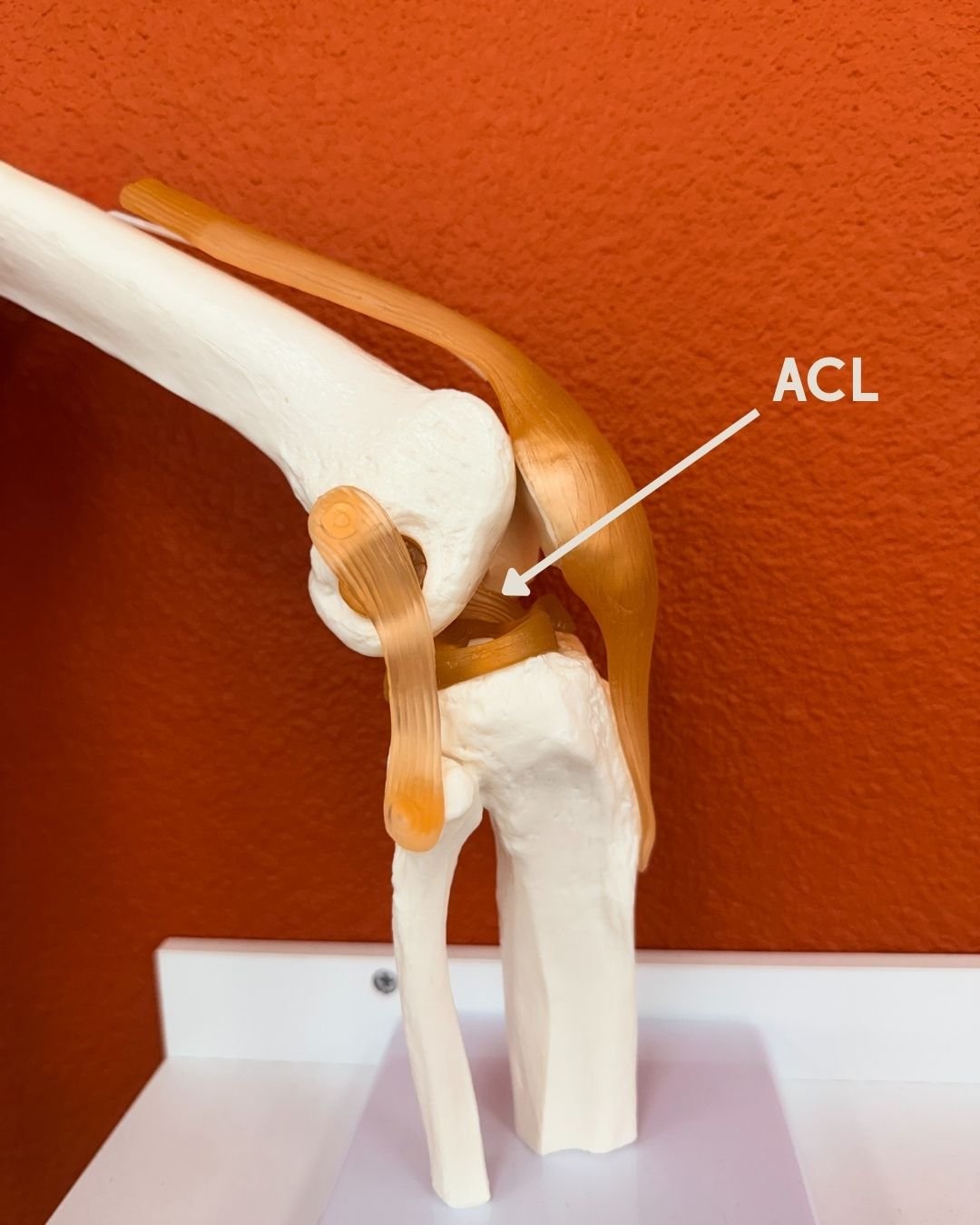
The primary function of the ACL is to restrain anterior tibial translation on the femur. During walking, the peak anterior shear force (this of this as stress to the ACL) was found to be over 300N at around 20 degrees of knee flexion. The peak anterior shear force during a seated leg extension was found to be less than 250N at 10-30 degrees of knee flexion and next to no stress on the ACL from 45-90 deg of knee flexion. Typically, a physical therapist will begin gait retraining with an athlete within the first week or two after ACL surgery, yet many will not begin any type of OKC exercise until a few weeks. If there is more anterior shear force (and thus, loading of the ACL) during normal walking than there is during a leg extension, then why the hesitation to prescribe it earlier in the rehab program?
Another thing to consider is that surgeons perform a Lachman Test, testing the integrity of the graft, right on the operating table immediately following surgery. This test is performed at 30 degrees of knee flexion with 150N (or about 34 lbs.) of force causes about a 3.5% strain on the ACL. A seated knee extension exercise from 90 degrees of knee flexion to 0 (fully straight) causes a maximal amount of strain on the ACL at 10 degrees of knee flexion, and this is only 2.8% strain with no added resistance, and only 3.8% strain with 10 lbs of added resistance. If a surgeon is okay with performing a Lachman Test on an athlete right after the graft is put in, then you should also be fine with doing open kinetic chain seated knee extensions as there is a similar amount of strain on your ACL.
The knee extension machine also helps address one of the most important things after ACL surgery: quad strength. Quad strength also helps us determine progressions, such as starting to incorporate jumping and running into rehab. Insufficient strength in the quadriceps muscles can lead to negative consequences such as delay in rehab progressions, altered movement patterns, changes in walking mechanics, and patellofemoral joint pain. To address this quadriceps weakness and mitigate its adverse effects, open-chain knee extension exercises are highly effective. These exercises are considered one of the best methods for isolating and building strength in the quadriceps.
So if the research shows there’s no increased strain on the ACL more than just walking and quad strength is essential, why skip the leg extensions? The short answer? Don’t!
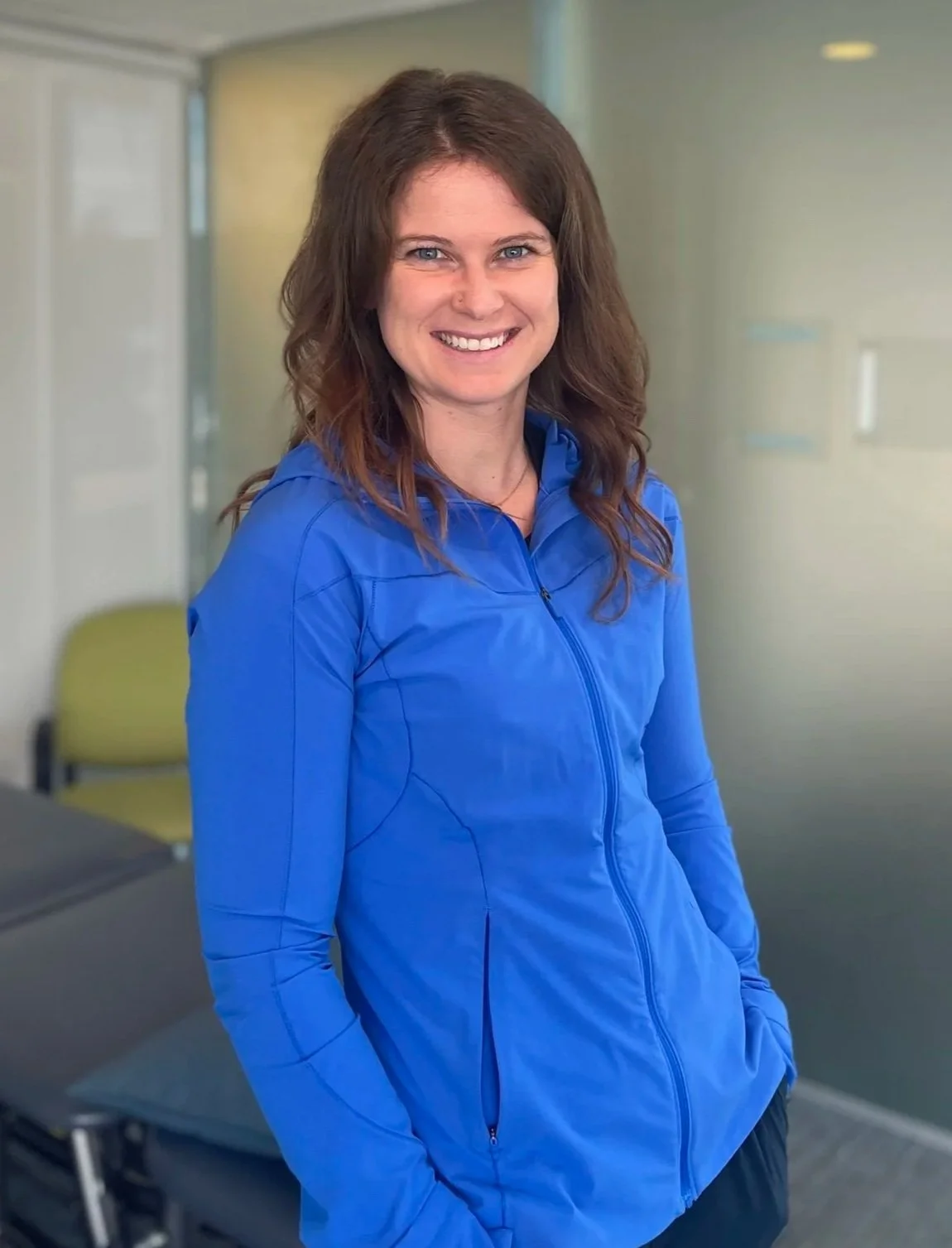
Dr. Cesca Picchi-Wilson, PT, DPT received her Doctorate of Physical Therapy from the University of New Mexico in 2021.
Cesca is a member of both our state and national professional organizations, the American Physical Therapy Association (APTA) as well as a member of the Academy of Orthopaedic Physical Therapy (AOPT). She graduated from University of New Mexico Physical Therapy Orthopaedic residency program in 2022 and became an Orthopedic Clinical Specialist (OCS) in 2023 after sitting for her boards.
In her spare time, Cesca enjoys working out, running Spartan races, hiking, playing and watching sports, and finding fun things to do around Albuquerque with her friends and family.